
Der wissenschaftliche Forschungsschwerpunkt der Professur umfasst die theoretische und computerlinguistische Analyse von Konversationen in sozialen Medien. Wir entwickeln auf künstlicher Intelligenz basierende Methoden, um sprachliche Charakteristika von Interaktionen in sozialen Medien herauszukristallisieren. Diese linguistische Grundlagenforschung wenden wir an, um zum Beispiel Desinformation und Beleidigungen in der Fülle täglich neu entstehender digitaler Texte aufzudecken.
Generell beschäftigt sich die forensische Linguistik mit rechtlichen Aspekten von Sprache. Die digitale forensische Linguistik verlagert dieses Forschungsgebiet in den digitalen Raum und untersucht hier potentiell schädliche Sprachhandlungen. Ein Anwendungsbeispiel sind negative Kommunikationspraktiken wie Manipulation und Falschinformationen, Hassrede oder Plagiate.
Aktuelles
- Short term research fellowships available
 The Coordinated Research Cluster 1475 „Metaphors of Religion“ is offering short term research fellowships for international PhD candidates: https://sfb1475.ruhr-uni-bochum.de/de/aktuelles/artikel/short-term-fellowships-within-the-crc-1475-2027/ If you fit the profile and are interested in computational approaches …
 - In October Dr. Maria Berger attended the LaSTing Kick-off Meeting in Tübingen
 Dr. Maria Berger attended the kick-off meeting for LaSTing, which took place on 8-9 October 2026 in Tübingen. The Priority Area “Robust Assessment & Safe Applicability of Language Modeling: Foundations …
 - Geraldine, Melce and Leonie attended KONVENS 2026
 In mid-September, several members of our lab had the chance to present their work at KONVENS 2026, hosted by the University of Hamburg. Leonie Uhling and Melce Hüsünbeyi presented a …
 - Team-building day
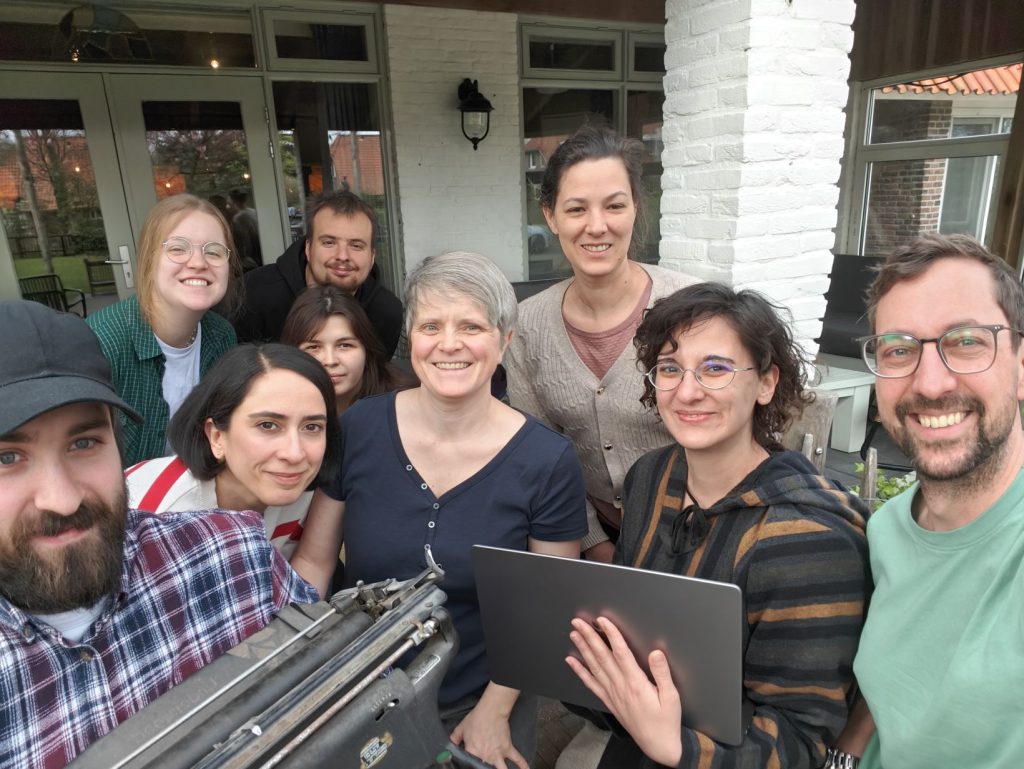
 We had a team-building day in September. After a short hike through the green countryside around Bochum in perfect weather, we enjoyed a delicious dinner that evening.
 - Job offer: PhD Candidate (65%, m/f/x) – Application Deadline 24.08.2026
 We are looking for a PhD Candidate (65%, m/f/x) in Digital Forensic Linguistics. All details as well as the online application form can be found in the official job posting.